










How To Teach Beginners Guitar
A step by step "how to" method for guitar teachers looking at a series of six introductory lessons for a novice guitarist
Teaching Beginners Guitar
Teaching guitar to beginners starts with simple chords, basic rhythm, and early "easy" wins" that help to keep students motivated.
In this guide, you’ll learn exactly how to structure your first six lessons for someone new to the instrument
This is what professional guitar teachers have been doing for decades They don't do it in order to follow some guru's "patent guitar teaching method" They do it because it works!
The first six guitar lessons with free lesson plans
Below you can see a series of six introductory beginners guitar lessons with free downloadable lesson plans designed to help a teacher get anyone new to the instrument off to the best possible start

Guitar Lesson 1
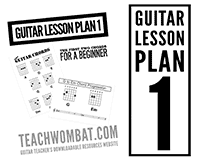
A first guitar lesson plan
Lesson objectives...
After this lesson your student will be able to........
Move between the first two chord shapes (G and Em) strumming those chordsin time to music
Download the free lesson plan
This is a very effective first guitar lesson because it involves a learner in playing "properly" and in time to music from the very beginning
Six Steps to Teaching a beginner's First Guitar Lesson
1: Help your student to form two of the eight most important beginners chords
Start by giving them a copy of the handout (shown in the graphic above) that deals with the first two chords (G and Em)and explain that the numbers inside the black circles refer to the fingers of the fretting hand
Encourage your student to learn the shapes individually and then help your student to move between the shapes strumming each chord once
2: Have your learner change between the shapes in their own time
A first step is to learn the chord shapes but really the objective of the lesson is to move between them in time to music when they can move between the chords try counting your pupil in "1-2-3-4" (asking them to strum downwards once on where "5" would be)
3: Move between chords in time to music with simple strumming patterns
Play the G to Em beginner's 'guitar backing track and encourage your learner to strum each chord once as it changes You may find it useful to count them "1-2-3-4" into each change again
Hear a short section of the backing track
It should be pointed out that this backing track is deliberately "sparse" featuring just drums and bass to allow the teacher and the student to develop a clear idea of when the chord changes happen
Follow this link to hear more of the thirty five guitar teaching backing tracks that come with the download

4: Introduce more complex "down-up-down-up" strumming patterns
You could take a look at thie video which covers suggested strumming patterns in detail but if you dont want to do that then the important thing to remember is that strumming patterns at this stage should be kept towards the beginning of the period after the chord changes leaving plenty of time for the (at this stage still slow) fingers to form the next chord
The video will start from "Guitar Lesson 1"
5: Recap lesson and issue a practice plan
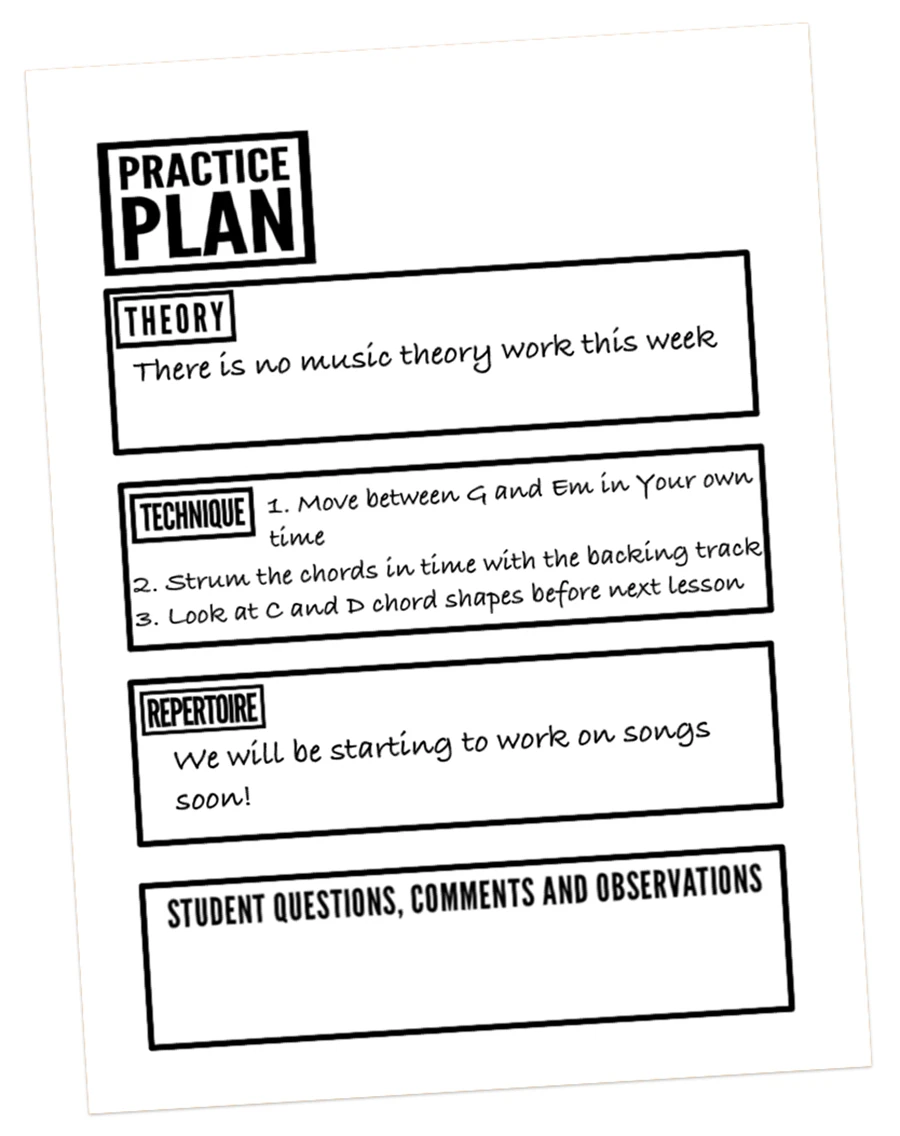
The download contains a blank practice planning document (shown below) that you can fill in and hand out at the end of each lesson that lets your student know what they should practice before the next session with you the download also contains colourful (or color in) versions of the practice plan if you are setting out to teach children to play the guitar
Guitar Teaching Practice Plans
The Practice Plan features spaces for activities relating to three areas "Theory", "Technique" and "Repertoire" which can be regarded as being the "Three Pillars Of guitar Teaching Wisdom"
6: Email mp3 backing track for home practice before next session!
Download absolutely everything you see and hear on this website (thats over 450 PDFs and 35+ Backing Tracks) for only $25.00
Rather than divide the materials into a series of teaching packs and sell them separately for $25.00 each (as I have been advised to do on numerous occasions by people who know much more about this online marketing malarkey than I do) I would much rather just bundle all of the resources together in a single download and have folks feel like they got a bargain rather than decide between options and run the risk of choosing the wrong one
$25.00
What's in the download?
Hit the button below to see a full list of the lesson plans, handouts, backing tracks and chordsheets etc that you can find in the download

Teaching guitar is not complicated unless you are doing it wrong!
I feel we know each other well enough now for me to point out that the first four lesson plans featured here are just the same lesson plan with different chords, handouts and backing tracks
More than that, the thirty five backing tracks in the download and the lessons associated with them work in exactly the same way All that happens after Guitar Lesson 6 is that you introduce new techniques such as the ability to form and play power chords and bar chords and get your student used to moving between them in time to music
Introduce Guitar Music Theory as appropriate and use the blank guitar necks and chord charts to introduce your students to existing songs that they know and (hopefully) love and you've hit the jackpot with "mission accomplished"
They got better and you got paid!
Guitar Lesson 2
There are two backing tracks used during this lesson
The first introduces two new chords (C and D) and the second combines all of the chords encountered to this point (G Em C and D) into a single progression
Download the free lesson plan
Five Steps to Teaching an effective Second Guitar Lesson
1: Recap the first lesson and address any problems arising from it
Revisiting the previous lesson is very important and is often missed by inexperienced (or just plain bad) guitar teachers
Your student will have (hopefully) been working on the material presented during the first lesson (moving in time to a backing track between the chords of G and Em) and while it is tempting to wish to move on to the "next thing" you should spend time assessing and aknowledging their progress to this point
2: Introduce the D and C chord shapes
Give a copy of the D to C chord chart to your student and ask them to study and form the chords in their own time first strumming each chord once and then responding to a "one-two-three-four" count
3: Have your student(s) play along to the backing track
As with the first lesson have them to sound each chord with a single strum before moving on to more complicated and involved strumming patterns as directed by you
D to C Backing Track
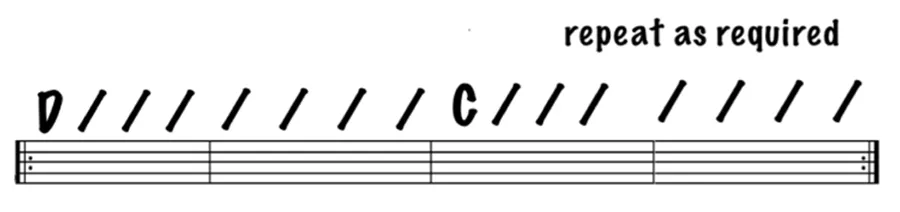
click to hear a short section of the track.....
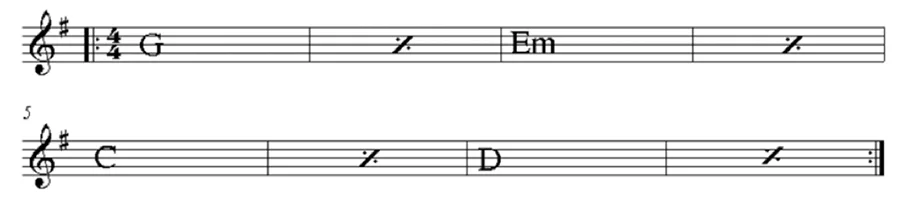
3: Use all four chords in a single progression
A backing track that uses all four chords in a single very common progression (think "Stand By Me" "Every breath You take" "Crocodile Rock" "Blue Moon" "Hungry Heart" "Simply The Best" "Teenager in love" and frankly thousands of others which use the same basic sequence of chords)
When they are capable of moving in time to the backing track (and not before!) you may choose to mention and demonstrate a version or section of a couple of the above songs to let your student know that they are getting towards the stage where they are capable of playing "real music" rather than just strumming along to a guitar teacher's fairly random and generic sounding backing tracks
G Em C and D Backing Track
Here's a short video I put on youtube that looks at the G- Em C and D chord progression and suggested strumming patterns that could feature in this lesson
The video will start from "lesson no 2"
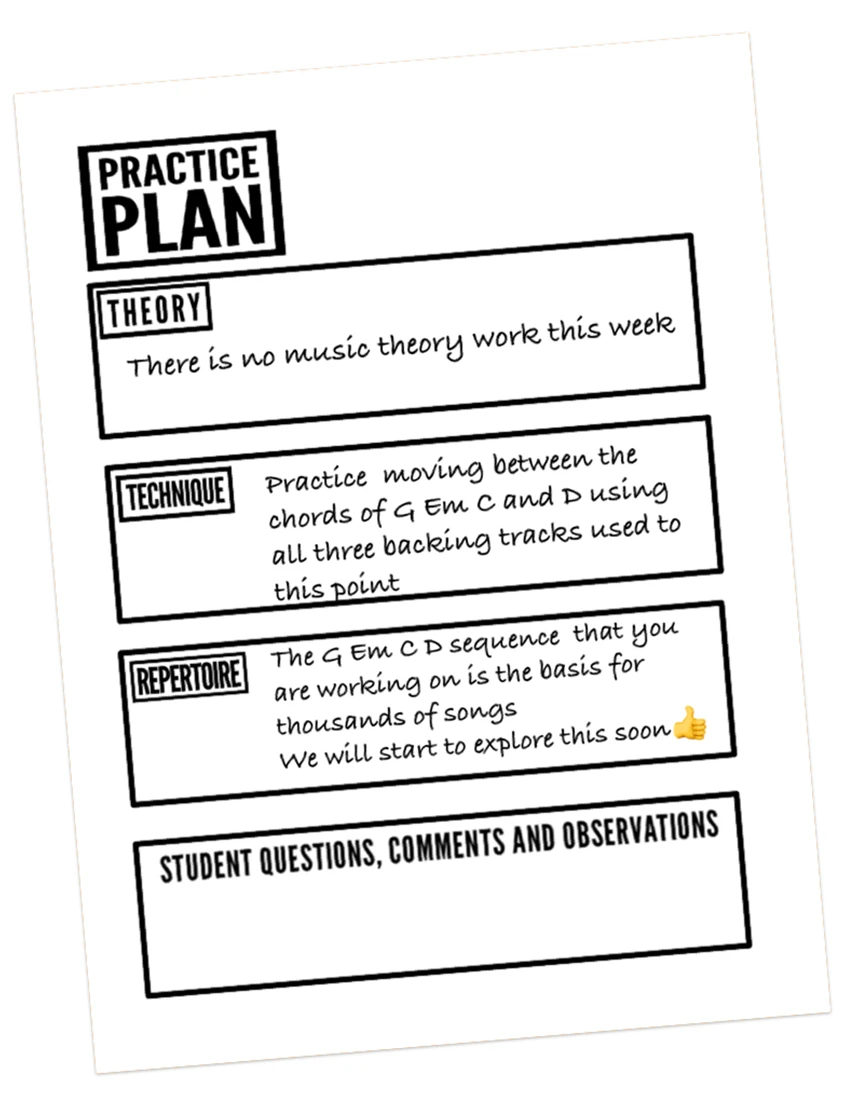
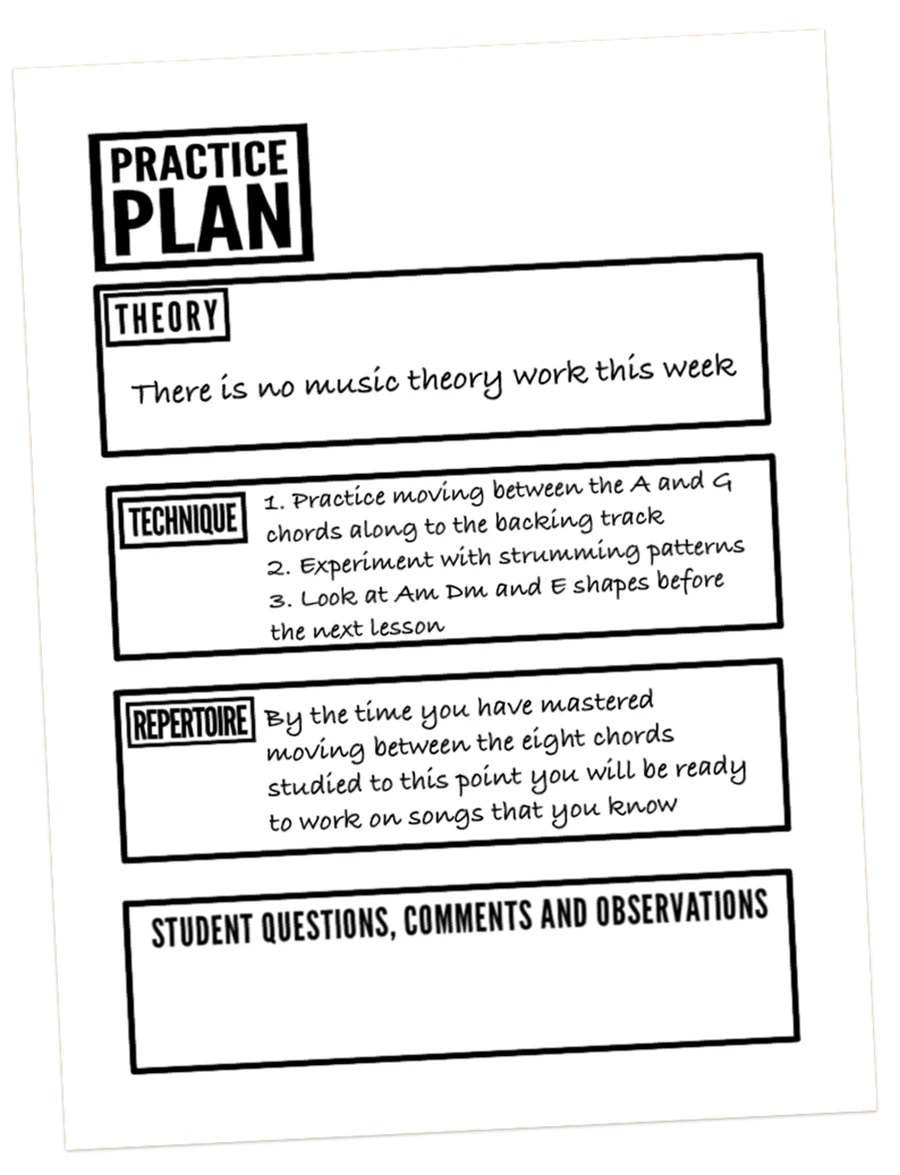
4: Fill in and give out a Practice Plan
The example practice plan below gives a student a clear guide as to what they should be practicing before the next session and also informs them of how the chords that they are learning to move between now will allow them to play literally thousands of existing songs in the very near future
5: Email the backing tracks to your student and tell them what happens next
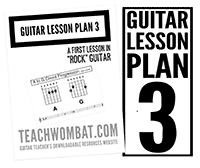
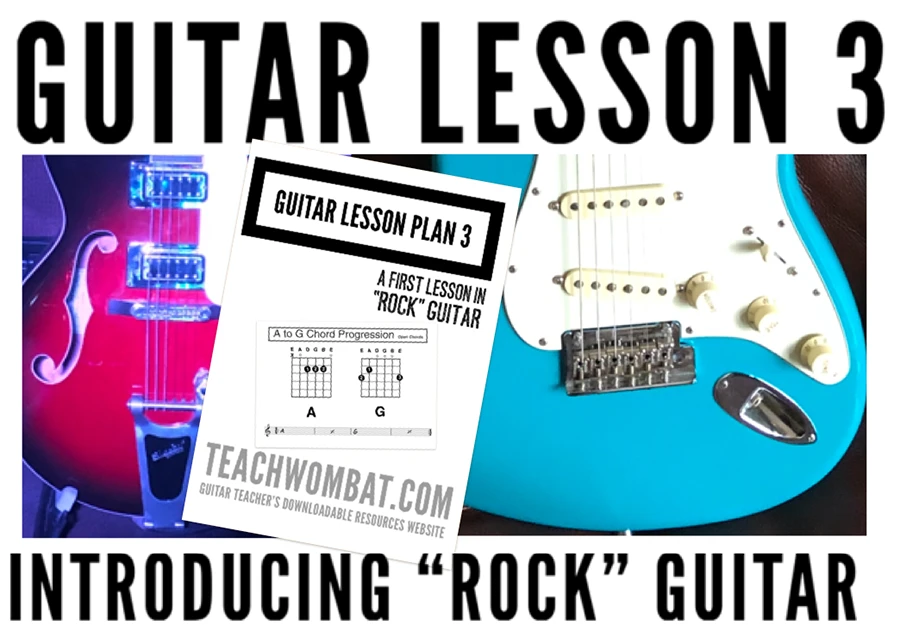
What happens next is lesson three where a new chord(A) is combined with one that they already know and 'Rock' music is introduced
Guitar Lesson 3
This is normally a popular one!
This lesson features one chord that a beginner will have already covered up to this point (G) and a new shape (A)
Download the free lesson plan
1: Recap the material covered during lesson 2 (moving between the G Em C and D chord shapes) and address any issues arising
A recap of what your student has been working on between sessions is very important not least because it shows them (and you) what they can do as the result of the practice that they have been engaged in before being confronted with something that they can't yet do (play the a chord)
2: Learn to form and strum (once) the chord of A
The chord of A presents no real problems with regard to stretching the (fretting hand) fingers Having said that your student may well have to spend a little time getting used to the idea of squeezing their fingers together to play three strings next to one another behind a single fret
3: Change between the chords of A and G (a shape that they already know) in time to music strumming each chord once as it changes
The backing track (which has a "hot" vocal intro and outro to up the energy levels and to let you and your learners know when the track is about to start and end) is simply a bass player and a drummer cycling between two bars of each chord The classic "power trio" line up leaving the teacher and the student to concentrate on moving between the chords
All of the backing tracks can also be used with intermediate and more advanced guitar students This one is great for using when learning to play bar chords or when working on solo lines using the Am Pentatonic scale etc
A to G Backing Track

4: Use more complicated strumming patterns
The important thing to remember about strumming patterns for beginner guitar players is to make sure that they happen during the first bar or so of each chord leaving lots of time for your student to change before the next chord
This means that the backing track does most of the "heavy lifting" while your student gets to play correctly and (importantly) in time to music from the very earliest stages of learning to play guitar
Take a look at the video below for more on strumming patterns
5: Make sure your student knows what to practice before the next lesson
As well as playing along to the new (A to G) backing track encourage your student to keep working with all four of the backing tracks and chord charts used to this point
We should not take our eyes off what this series of lessons is really about which is to get a novice to be able to move between the eight best beginners guitar chords in time to music
6: Give your student a practice plan and email the backing track to them for home study
Email the backing track to your student and let them know that in the next session they will work on the final three chords that a beginner on the guitar should learn
A Video "Walk Through" Of The Lesson
Here's a short video I have up there on youtube that looks at this lesson and suggested strumming patterns in greater detail.....
The video will start from "lesson no 3"

Guitar Lesson 4
Funky drums and bass with an atmospheric synth pad bubbling away in the background gives a satisfying way to have your students move between the final three beginner's chords (Am Dm and E) smoothly and in time to a band
Can I again urge you (if you have not done so already?) to look at the video to get a real feel for how this stuff fits together in practice
The video will start from "lesson no 4"
The video has material relating to the best strumming patterns etc that makes much more sense there than If I wrote anything down about them
Download the free lesson plan
1: Recap the material covered during lesson 3 (moving between the A and G chord shapes) and address any issues arising
It is always a good idea to start a lesson by covering material from the previous session It gives your student a chance to show you what they can do, reassures them that you have a plan It lets them know that you are not just throwing random chords or activities at them (they can get that themselves by simply trawling the internet)
2: Give out the chord chart and have your student learn to form and strum (once) the chords of Am, Dm and E
Unlike the previous session where a single new chord shape (A) was introduced this lesson requires a student to form three new chords and naturally the new shapes will take a little time to master
From a technical point of view they are probably all easier to form than the A chord (where your student had to press down three strings behind a single fret) and that is why we are able to combine them into a single lesson
3: Use all three new chords in a single progression
As before start work with the backing track by asking your student to play the correct chord once at the beginning of each bar and once they are comfortable doing this you can introduce your student to more complicated strumming patterns (for example "sausage-egg-and-chips" if this confuses you then all will be explained in the video)
It is important to note that even though the strumming paterns are faster and more involved they should still take place just after the chord changes which leaves plenty of time for changing shape and being ready for the next chord
Am Dm and E Backing Track

Hear a short snippet of the backing track used as part of this lesson
4: Complete and hand your student a practice plan letting them know what to work on before the next lesson and inform them of what they can expect from that session
The next session is one where progress to this point can be evaluated and a plan can be developed for the next stage of learning
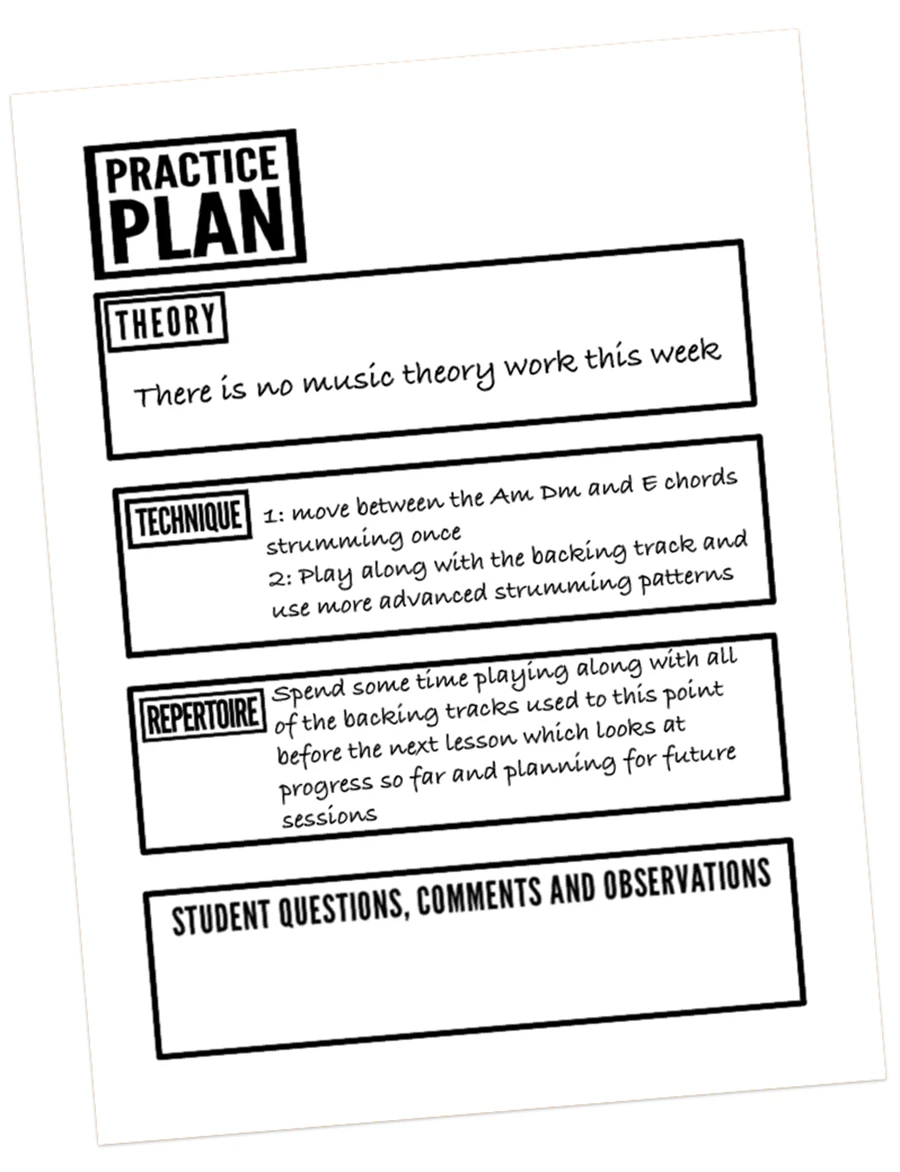
Above you can see an example of the type of practice plan that you could use for this lesson
Make Your Own Teaching Resopurces
It should be noted that following on from the next lesson the "Repertoire" section of your practice plan is likely to contain materrial relating to "real" songs that you can provide by using the resources in the download that will allow you to customise your own guitar teaching resources

Guitar Lesson 5
Recap and planning session to secure the skills developed to this point
This lesson presents an ideal opportunity to assess progress so far and plan future sessions
Learning any musical intrument is by nature a slightly messy business and every student will learn at a different rate to any other and it cannot be stressed enough that this is how it has always been and how it should be
Our job as a guitar teacher is to make sure that a student is travelling in the right direction and not to "not sweat the small stuff" too much
If a student can move between the chords more or less in time to music at this stage then the object of the next stage is to present them with a bunch of backing tracks that will challenge them a little more either by the introduction of new chord shapes or more rapid chord changes
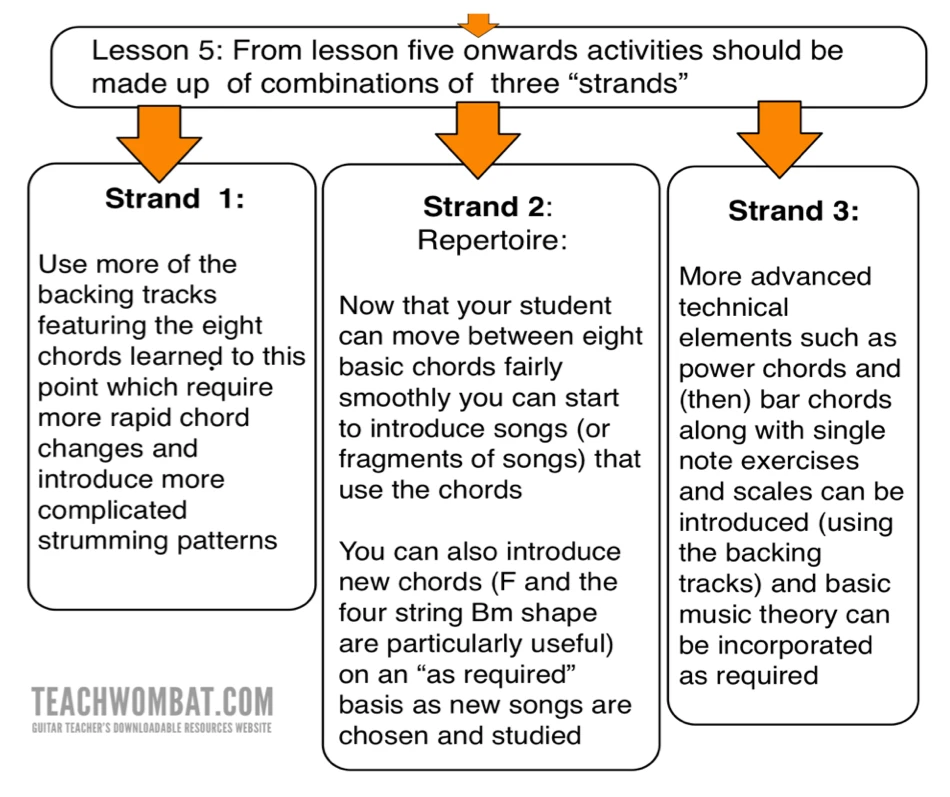
Planning Guitar Lessons
It is a good idea to employ a general "rule of thumb" from this point that a guitar lesson will contain an element drawn from each of the following strands
Strand 1: Working With Backing Tracks
Now that a student can change basic chords it is time to develop that capability further and challenge them with more rapid chord changes with more advanced strumming patterns
The download contains 35 backing tracks and goes well beyond the novice stage with a whole range of genres (Funk, Rock and Blues etc) and they can almost all be used when working with intermediate and more advanced students who require help with more involved chordal or solo styles
Strand 2: Developing Repertoire
This is the perfect stage at which to introduce "real" songs to your learners
The work that they have done to this point means they are ready to play thousands of chord progressions that they recognise and can associate with music that they know and love The challenge to you as a teacher is to find out what your student likes to hear and wants to play
From there it is a case of presenting the material to them in an easily understood (and perhaps simplified if required) way
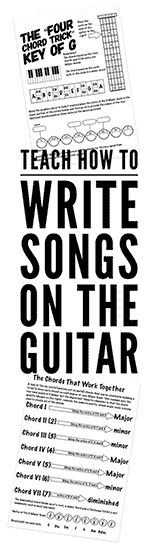
The chords that they have learned to move between to this point are particularly suited to playing common chord progressions in the key of G and guitar teachers often move songs from more difficult keys (where bar chords or more difficult shapes would be required) into the key of G to present them to their students
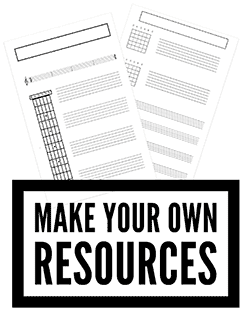
The download has a whole load of blank neck, chord and tab sheets designed to allow you the flexibility to easily create your own guitar teaching resources
You can see them in action by following the link below....
Strand 3: Technique and Music Theory
What is normally required for a student at this stage of development to progress effectively is to work on the mastery of more useful techniques such as the ability to play bar chords and solo lines or passages along with the first steps towards understanding useful music theory
when learners are capable of moving between the chords in time then it is the ideal time to introduce songs (or fragments of songs such as chorus/hook etc) that they are already familiar with and like or even better love
If students try to learn songs that they know before they have the facility to change smoothly between chords it is likely to discourage them because they will hear themselves "going wrong" in comparison to the version of the song that they carry around inside their own head
Another real advantage of using the backing tracks (aside from the important one of encouraging them to play in time to a band from the very start) is that because the tracks are not trying to reproduce versions of songs that they already know they are less likely to dislike the results
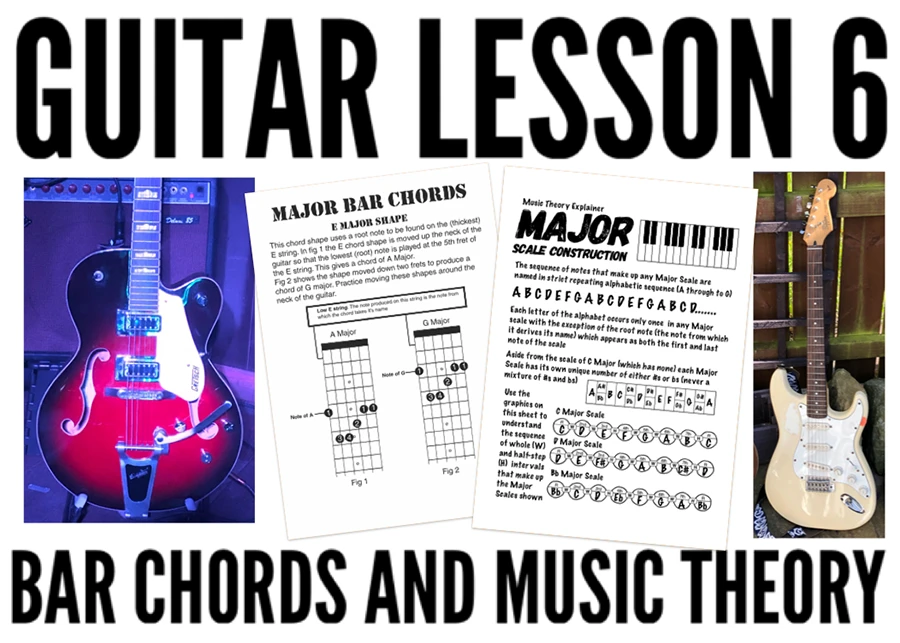
Guitar Lesson 6
Beginning work on Power Chords, Bar Chords and basic Music Theory
Download absolutely everything you see and hear on this website (thats over 450 PDFs and 35+ Backing Tracks) for only $25.00
Rather than divide the materials into a series of teaching packs and sell them separately (as I have been advised to do on numerous occasions by people who know much more about this online marketing malarkey than I do) I would much rather just bundle all of the guitar teaching aids together in a single download and have folks feel like they got a bargain rather than decide between options and run the risk of choosing the wrong one
$25.00
Professional Guitar Teachers are a diverse and independent minded bunch but the best (most successful and established!) ones tend to follow the same set of basic guidelines when it comes to how to teach beginners guitar
They know enough about playing and teaching the guitar to understand that there are a bunch of open chords that a beginner will find comparatively easy to form and strum that will allow them to play the most music effectively
To find out why this should be so you could go to our Guitar Music Theory page but if you don't want to do that then you could just trust me when I tell you that....
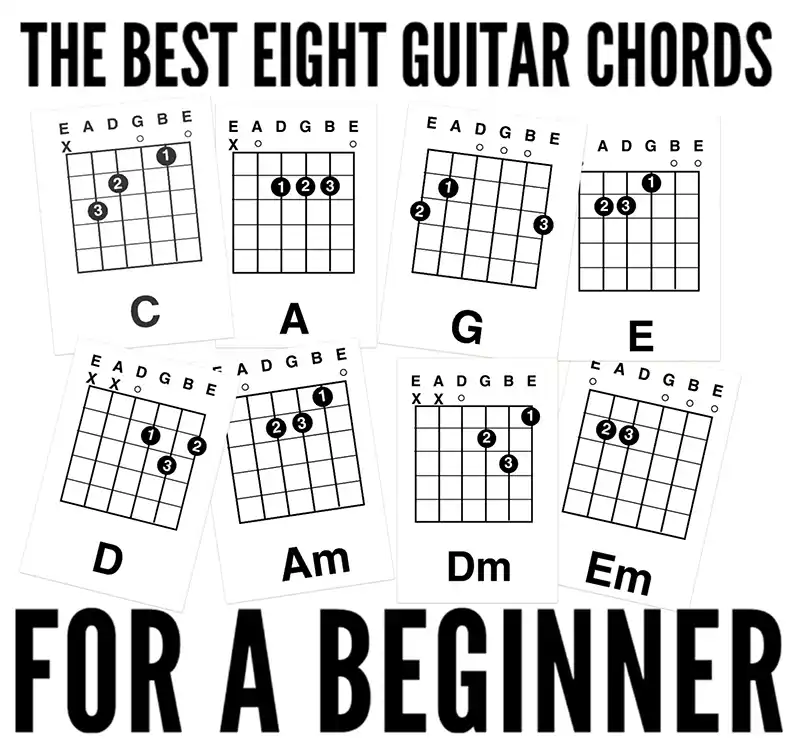
The best guitar chords for a beginner are C, A, G, E, D, Am, Dm and Em
By Learning To Move Between Those Chords In Time To Music a guitar student will become able to operate in some of the most useful and "guitar friendly" keys
They will also prepare themselves for the next (intermediate) stage of playing guitar where they are ready to move on to teaching guitar power chords and bar chords as well as to develop capabilities themed around single note passages and solos
Below is a framework for effectively teaching guitar to beginners
It is not The First Six Beginners Guitar Lesson Plans (follow the link for that) but rather it offers an overview of which areas of guitar playing a teacher might focus on during the early weeks, months (and sometimes years!) of a guitar students journey from absolute beginner to strong intermediate level player
1: Learn to move between the Eight Best Beginners Chords in time to music
2: Work On a few Single Note Riffs And Phrases
3: Introduce Power Chords and Basic Music Theory
4: Introduce Bar Chords and Solo Lines that use The Pentatonic Minor Scale
5: More Advanced Chords and further develop Music Theory
How to teach chords on guitar
Moving between the best eight beginners guitar chords in time to music
Why are the chords above considered to be the "best" ones for a beginner to learn?
They allow a novice to play the most important chords in a few "guitar friendly" keys which means that by learning to move between them in time to music results in the most possible options with regard to how many songs they will be able to play
By choosing this selection of chords guitar teachers are also able to ensure that their students are not asked to work on common chords that are not too difficult for them (such as the F chord) which can lead to frustration and (even worse) to someone giving up the instrument because they believe that it is "too difficult"

Single Note Lines and Riffs For Beginner Guitar Players
A very crude and broad brush approach allows us to divide guitar playing into two categories "Rhythm Guitar" where chords are played in order to accompany the vocals in a song and "Lead Guitar" which relies on single note passages As teachers we may very well know that its not that simple but beginners can find the distinction useful Our Blank Guitar Necks and Tab Sheets allow a guitar teacher to develop a whole range of single string and solo resources that they can scan/copy and print as many times as they need to
If you take a look at the you will see that the introduction of single note riffs, phrases ans solos does not feature anywhere This is because experienced guitar teachers tend to introduce this kind of content on an informal "as required" (or when the opportunity presents itself) kind of basis
The truth is that at this stage you dont want to be taking up a whole lot of lesson (and practice) time up when the more important goal is to have your students develop the ability to move between chords and strum effectively Single note stuff is good but at this stage it is the "icing on the cake" rather than being the cake itself
The list of potential riffs and figures is endless (I cant sell them, quite rightly for copyright reasons) but favourites for beginners include
(which uses every note of the blues scale)
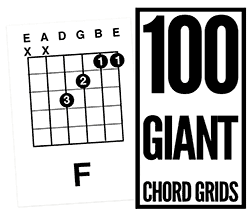
There are more than thirty blank chord and neck diagrams with loads of useful combinations of chord grids, guitar necks and tab sheets to ensure that as a teacher you always have the resources on hand to help you to get your message across
Download EVERYTHING! you see on this site for only $25.00
35 backing tracks and the chord charts and teaching aids that go along with them. Over 400 Sheets to Download and use in your guitar teaching business TODAY!
Power Chords and First Steps in Music Theory
Whilst students are learning to move between the eight chords that all beginners should learn first they have no real use for Guitar Music Theory
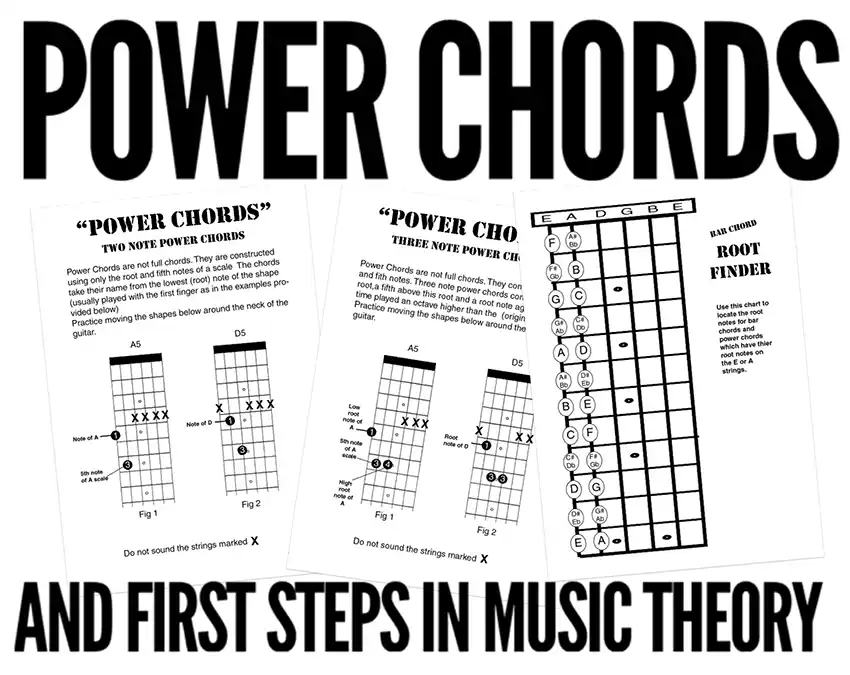
This changes when they are ready to play power chords (and soon after, bar) chords At this stage they need to know what notes are called and where they can find them on (the lowest two strings of) the guitar in order to identify where they canplay the chord that they require
A quick look at the graphic above will let you see the handouts explaining what power chords are the sheet on the right is a "root finder" which allows the student to work out (and then remember) where moveable chord shapes can be based on the neck of the guitar
Two, and then three note power chords are the ideal "gateway drug" into helping a guitar student become capable of playing the "full" bar chords featured in the next section

Bar Chords and Pentatonic Minor Scales
I'm a guitar teacher and my definition (others may differ) of the end of the beginner stage for a student is when they are able to move on from changing between the eight chords that any novice should learn first in time to music and are able to cope with finding root notes for power and bar chords and moving those shapes around the neck of the guitar in time to music
It is the point where scales and improvising can be introduced and there is no better place to start that the pentatonic minor scale
Widely used in Rock,Pop, Blues and Country music the download contains a whole load of More Advanced Backing Tracks and the Handouts to go with them that are simple to use and are invaluable when developing single note and improvisational skills
Teaching Chords On Guitar
Teaching the right chords from the beginning is very important and the chords that you do teach should be the easiest to form and the most useful to know for your students
The eight best beginners guitar chords referenced on this site are easy to play (as they use lots of open strings and do not requre a student to press down more than one string with a single finger)
Once a learner has the ability to move comfortably between them they can play all but one (Bm)of the chords commonly found in the key of G (G, Am, C D and Em) which means they are equipped to play thousands of pop, blues folk and country songs in the key of G
They will also be ready to play blues and rock and roll songs in the key of A (using the A D and E chords)
It is a good idea for a guitar teacher to spend time making sure that students are familiar with moving between the eight "best" chords in a variety of styles before moving on to more advanced material

Download EVERYTHING! you see on this site for only $25.00
35 backing tracks and the chord charts and teaching aids that go along with them. Over 400 Sheets to Download and use in your guitar teaching business TODAY!
